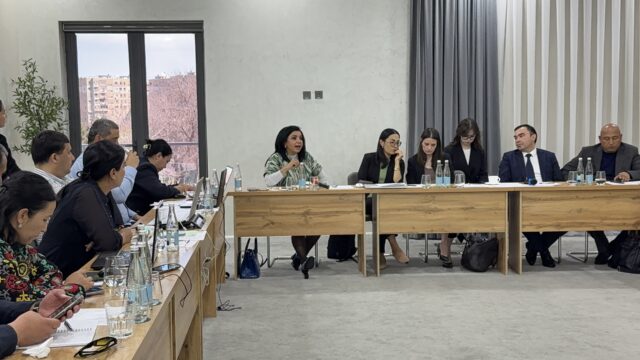
On 27 March 2026, a follow up roundtable on Strengthening Training Results and Experience Sharing was held in Tashkent. The event was organized by the Representative Office of the Association of Central Asia in Uzbekistan in cooperation with the British Embassy in Tashkent, with the participation of the Ombudsperson (Commissioner for Human Rights) of the Republic of Uzbekistan.
This roundtable served as a continuation of the 2025 training titled Transforming Local Challenges into Advocacy Action. It aimed to provide a platform for civil society organizations to present their work at the local level, exchange experiences, and identify next steps. During the event, participants shared the results of their mini grant projects, discussing their practical relevance, impact, and future potential.
The mini grant initiatives addressed pressing social issues across different regions. These projects focused on protecting human rights, increasing legal awareness, expanding opportunities for women and youth, and promoting inclusive approaches. During the presentations, NGO representatives openly discussed the challenges they faced, the strategies they applied to overcome them, and their experiences in conducting advocacy at the local level. This exchange enabled participants to compare regional experiences, identify common challenges, and develop more effective approaches.
Special attention was given to issues of human rights, gender equality, social inclusion, and local level advocacy. Discussions also highlighted the importance of strengthening cooperation between state institutions and civil society, as well as supporting and scaling up local initiatives.
The roundtable featured international expert Navbahor Imamova, journalist at Voice of America, who shared her insights on the role of media in covering civil society initiatives, raising awareness of local issues, and drawing on international experience.
Overall, the event served as an important platform for civil society organizations to present their work, learn from each other, and establish new partnerships. It also marked a significant step toward supporting local initiatives, strengthening advocacy capacity, and advancing practical progress in the field of human rights.